Anybody who has a missing tooth or had a tooth extraction is a candidate for dental implants!
Fixed Multiple Tooth Replacement: As with single tooth replacement, temporary healing caps or abutments may be placed on multiple implants until the healing phase is complete. After healing, permanent abutments are attached to the implants. They can attach to custom-made crowns or bridgework that a dental laboratory will fabricate to match your existing teeth. In the final step, the custom bridge, which will replace multiple teeth, is cemented or screwed onto the abutments. The teeth have been replaced without disturbing the healthy teeth next to them, and bone loss has been halted.
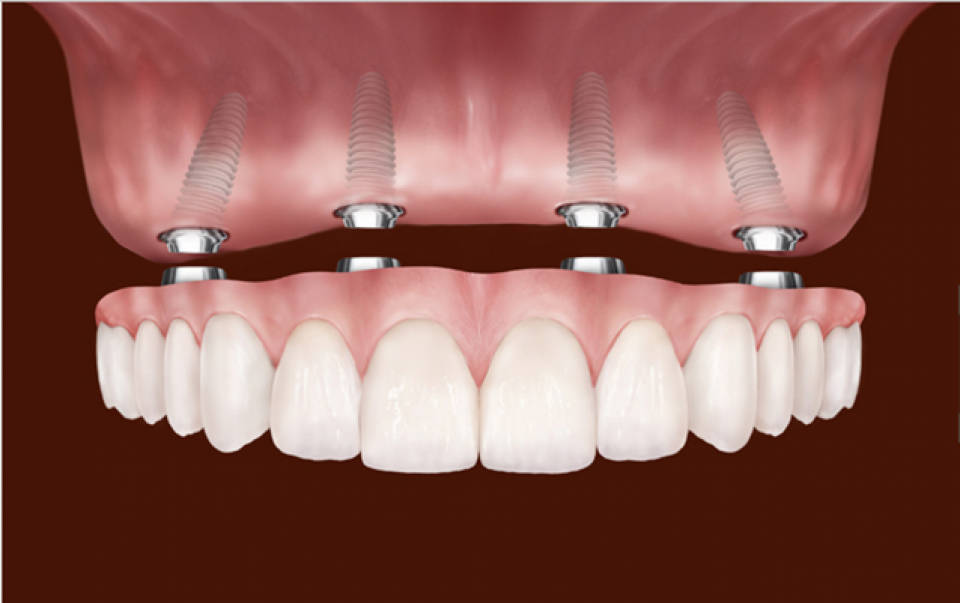
Removable Implant-Supported Tooth Replacement: If all of your lower teeth are missing, depending on the design of the removable restoration, two to six implants may be used to support a lower denture. If all of your upper teeth are missing, a minimum of four implants may be used to support an upper denture. Removable dentures are often used to replace extensive tooth, bone and gum-tissue loss, thus providing support for the facial skeleton, lip and cheeks. A new denture can have attachments that snap or clip it into place on the implants or a custom made, milled bar can be fabricated to create additional strength and support for the restoration. Design variations are often related to your bone density and number of implants present; your dentist will discuss these options during your consultation. A significant advantage of a removable denture is facilitating the cleaning of the dental implants.